With the development of landscaping, wood processing, and construction demolition industries, the demand for handling various types of waste wood, branches, sawdust, etc. is increasing day by day. Traditional wood processing methods either rely on large equipment with high costs or have low efficiency in manual crushing, and are prone to resource waste and environmental problems. Against this backdrop, the single-door wood crusher, with its outstanding advantages of flexibility, convenience, and efficient crushing, has become the “new favorite” for small and medium-sized wood processing scenarios, providing an economical and practical solution for the resource utilization of wood waste.
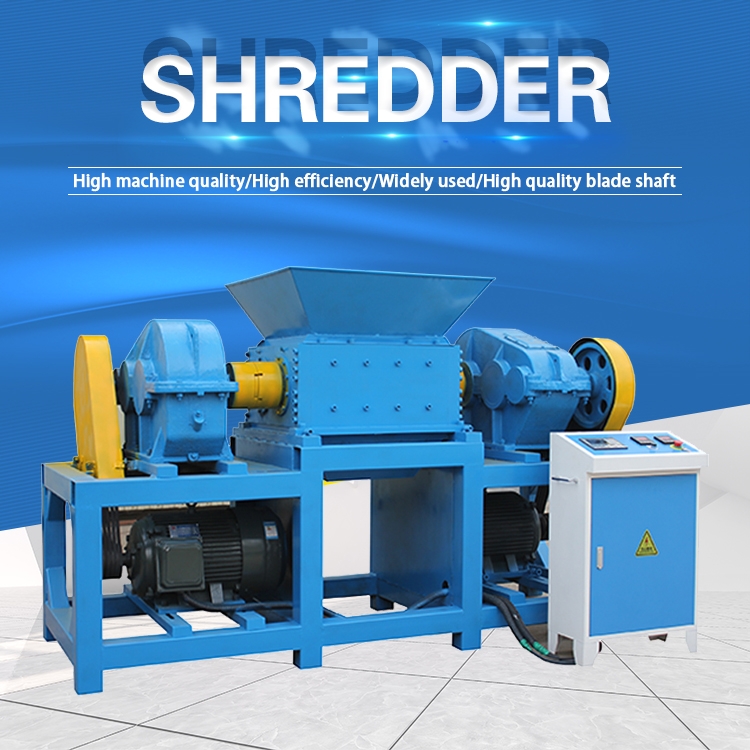
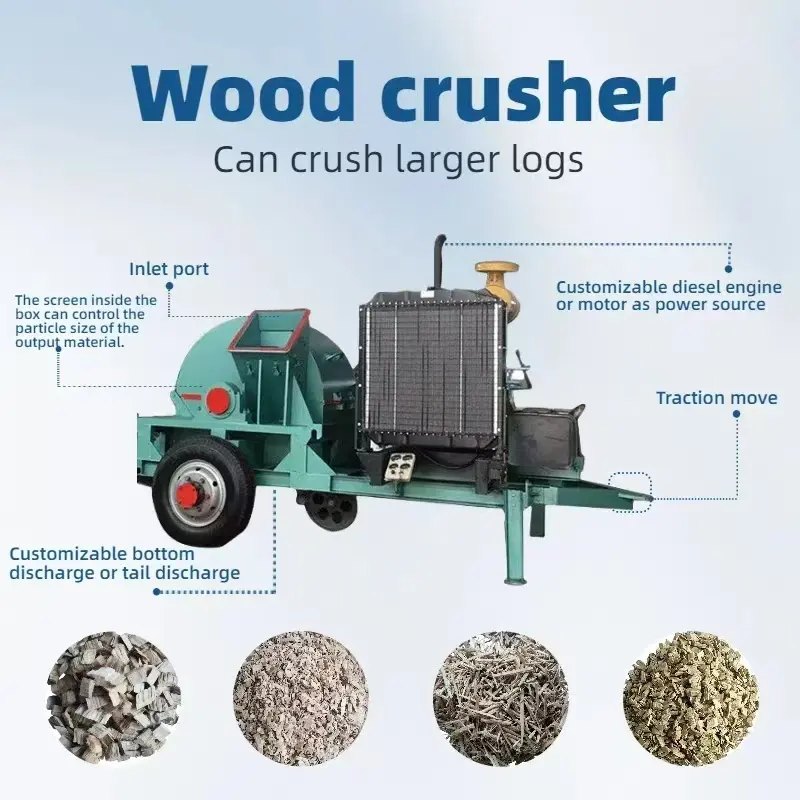
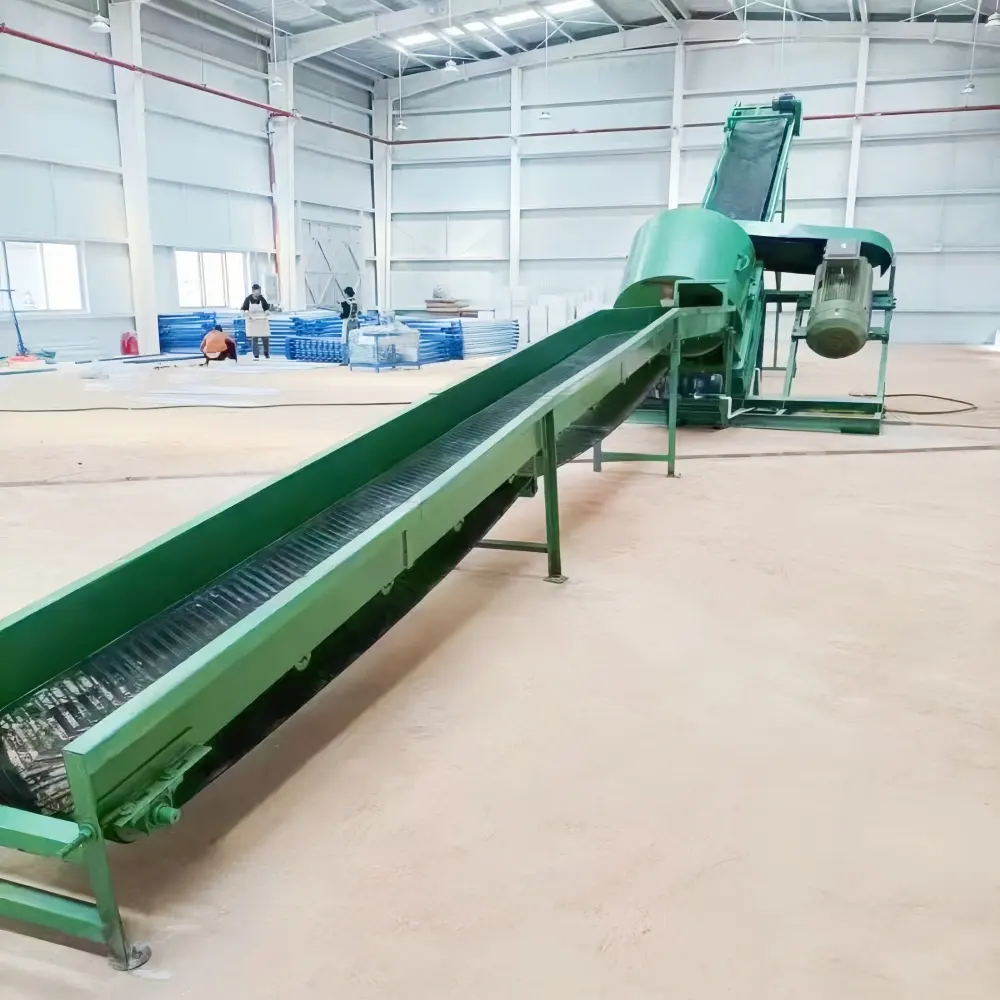
The single-door wood crusher is a crushing equipment specifically designed for small and batch-sized wood materials. Its core consists of an inlet, crushing chamber, cutter disc, motor, and discharge device. Due to its single-inlet channel structure design, it is named so. Its working principle is simple and efficient: operators place the wood materials into the dedicated single-door inlet channel, and the motor drives the cutter disc to rotate at high speed. Through the wear-resistant knives on the cutter disc, the wood is cut and crushed, and finally, the large pieces of wood are processed into the required wood chips, wood pieces, or wood powder, and the finished products are discharged directly through the discharge port. Compared with multi-door or large-scale crushing equipment, its structure is more compact, and it is more convenient for movement and placement, especially suitable for operation scenarios with limited space.
Flexibility, convenience and strong adaptability are the core competitiveness of the single-port wood chopper. The single-port feeding design of this equipment has been optimized, and the feeding diameter is suitable for most common wood specifications. Whether it is unevenly sized branches, scattered waste wood boards, or construction waste wood with a small amount of impurities, they can all be smoothly fed without the need for complex sorting and cutting in advance. At the same time, the equipment has a moderate size. Some small models can be equipped with mobile wheels, which can directly be pushed to the operation site in the garden or construction site for on-site crushing, avoiding the cost and loss of long-distance transportation of wood materials. A person in charge of a landscaping maintenance company said: “Previously, the branches cut off during pruning had to be transported to a designated location for processing. Now, using the single-port wood chopper, they can be crushed into wood chips on the spot and can also be directly used as organic mulch. It’s both economical and convenient.”
Efficiency, environmental friendliness, and cost control have further enhanced its market value. Although the single-port wood chipper is not large in size, its crushing efficiency far exceeds that of manual operation. The motor’s power output is stable, enabling it to quickly complete the wood crushing process. The finished particles are uniform and can be directly used as edible fungus culture medium, biomass fuel raw materials, garden mulch, etc., achieving resource recycling. In terms of environmental protection, the equipment is equipped with simple dust prevention devices, which can reduce the spread of dust during the crushing process and meet basic environmental protection requirements. In addition, the equipment has a simple structure, few wear parts, and is easy to replace, resulting in low daily maintenance costs. For small-scale farmers, individual business owners, and small enterprises, the investment threshold is low, and the return on investment is fast.
The wide range of application scenarios enables the single-head wood chopper to play a role in multiple fields. In the field of landscaping, it can handle branches, tree trunks, fallen leaves and other debris from pruning; in the wood processing industry, it can crush leftover materials and substandard wood, achieving waste recycling; in the construction industry, it can process discarded wood templates and wood components from demolition; in the agricultural field, it can shred straw, fruit tree branches, etc., and use the resulting materials to make organic fertilizers or breeding bedding; at the same time, it also has important applications in biomass energy processing and edible fungus cultivation, becoming a “wood processing expert” in multiple fields.
With the widespread adoption of the concept of wood recycling, single-door wood chippers are also constantly being upgraded. They are continuously optimized in terms of noise reduction, energy saving, and adjustment of crushing accuracy. In the future, new single-door wood chippers that better meet the needs of small and medium-sized users will further contribute to the reduction and resource utilization of wood waste, injecting grassroots strength into green development.